Nvidia’s rise was driven by more than a succession of successful chips. Jensen Huang paired bold technical bets with a public, theatrical leadership style, turning the company’s chief executive into a celebrity. His departure leaves Nvidia with a strong product pipeline, but raises questions about who can replace his vision and influence.
Huang cofounded Nvidia 33 years ago and built it into the dominant supplier of GPUs used in the AI boom. The company had no named successor, and roughly 60 employees reported directly to him. “He built the company around himself, and everything that happened there flowed through him,” said Tom Mainelli, an analyst at IDC and former computing journalist. Jon Peddie, who has tracked Nvidia since its inception, put it more bluntly: “Jensen is Nvidia, and Nvidia is Jensen.”
His leadership combined showmanship with high-stakes technical decisions. After Nvidia nearly failed in 1996, following a graphics-chip project for Sega’s Dreamcast, Huang persuaded Sega to invest $5 million, The Wall Street Journal reported in 2024. He later staked the company’s future on the Riva 128 graphics accelerator, then on CUDA, a platform that let users apply Nvidia GPUs to computing beyond graphics. CUDA raised the cost of each GeForce card by 50 percent, Huang told podcaster Lex Fridman, but the technology helped position Nvidia for the emergence of AI.
Analysts say Nvidia’s near-term business is not dependent on Huang’s presence. Pat Moorhead of Moor Insights & Strategy said its roadmap and manufacturing plans are set through 2027. Ben Bajarin of Creative Strategies said the product pipeline remains strong, with several generations already in design, production preparation or on order. Nvidia’s supply-chain position, from advanced wafers and packaging to memory and rack-level partners, is also an asset that does not leave with one executive.
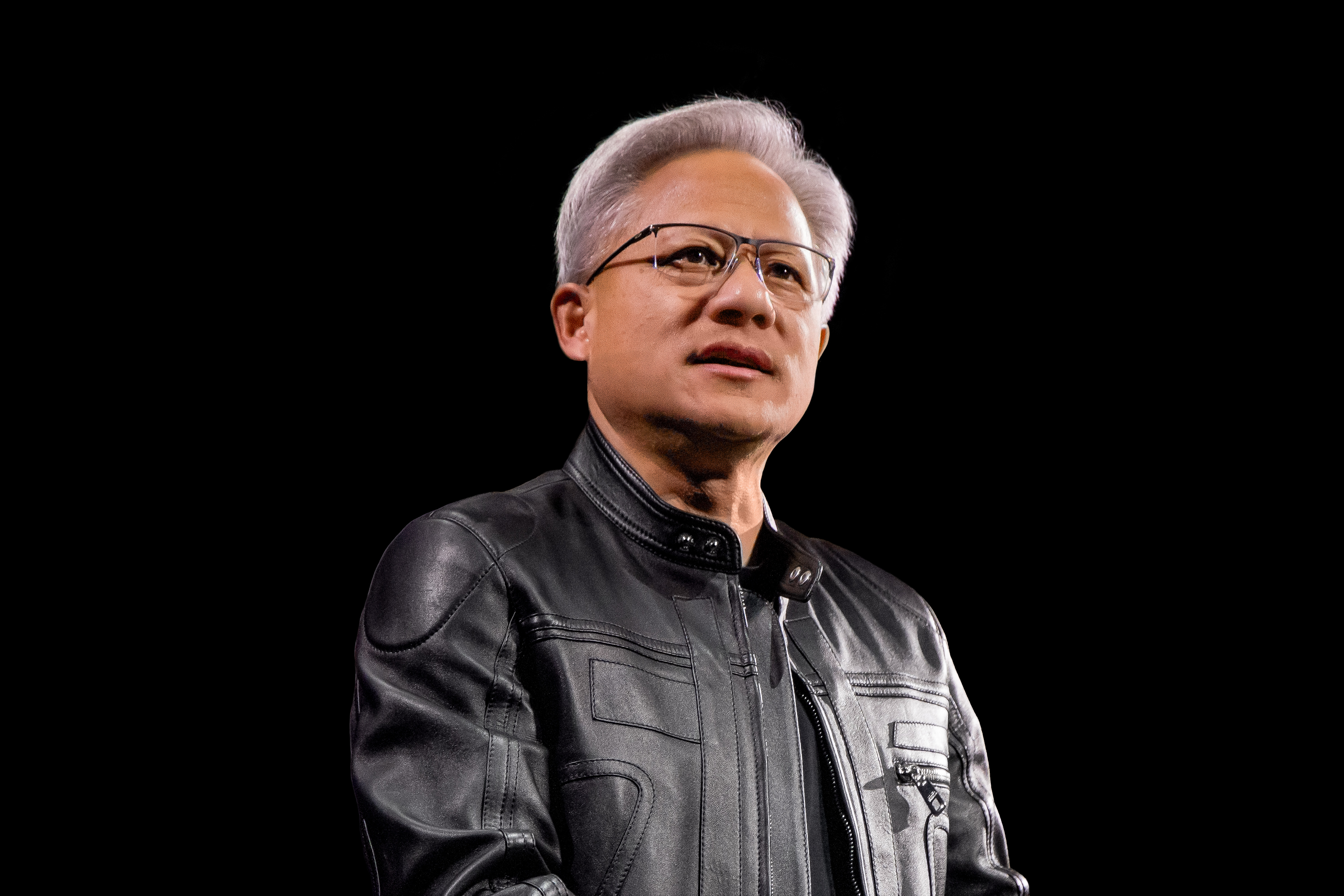
The longer-term question is whether a successor can sustain Huang’s pace of innovation and willingness to make investments before demand is certain. Moorhead said customers could hedge while leadership remains unsettled. Peddie predicted the stock could face turbulence until investors see stability, and said Nvidia may need an outsider to take the role. Huang’s departure also ends an unusually visible era in technology leadership: he used keynotes and his trademark jacket to sell a vision of computing, while making bets that helped Nvidia move from gaming graphics to AI infrastructure.




Comments (0)
No comments yet. Be the first!