
The company aims to transition from manufacturing standalone service robots to building a scalable intelligence ecosystem. By utilizing a three-layer architecture—consisting of the robot body, the PuduAgent OS, and the PuduFM foundation model—Pudu intends to allow various robot forms to share the same underlying decision-making capabilities. This approach seeks to solve the industry-wide challenge of migrating specialized skills across different hardware platforms, such as delivery units, cleaning machines, and humanoid systems.
Pudu Robotics Unveils Semi-Humanoid D7 at WAIC 2026
At the 2026 World Artificial Intelligence Conference in Shanghai, Pudu Robotics debuted its industrial-grade semi-humanoid robot, the PUDU D7. The launch serves as a practical demonstration of the company’s "One Brain, Multiple Embodiments" architecture, designed to integrate AI across diverse robotic hardware through a unified software foundation.
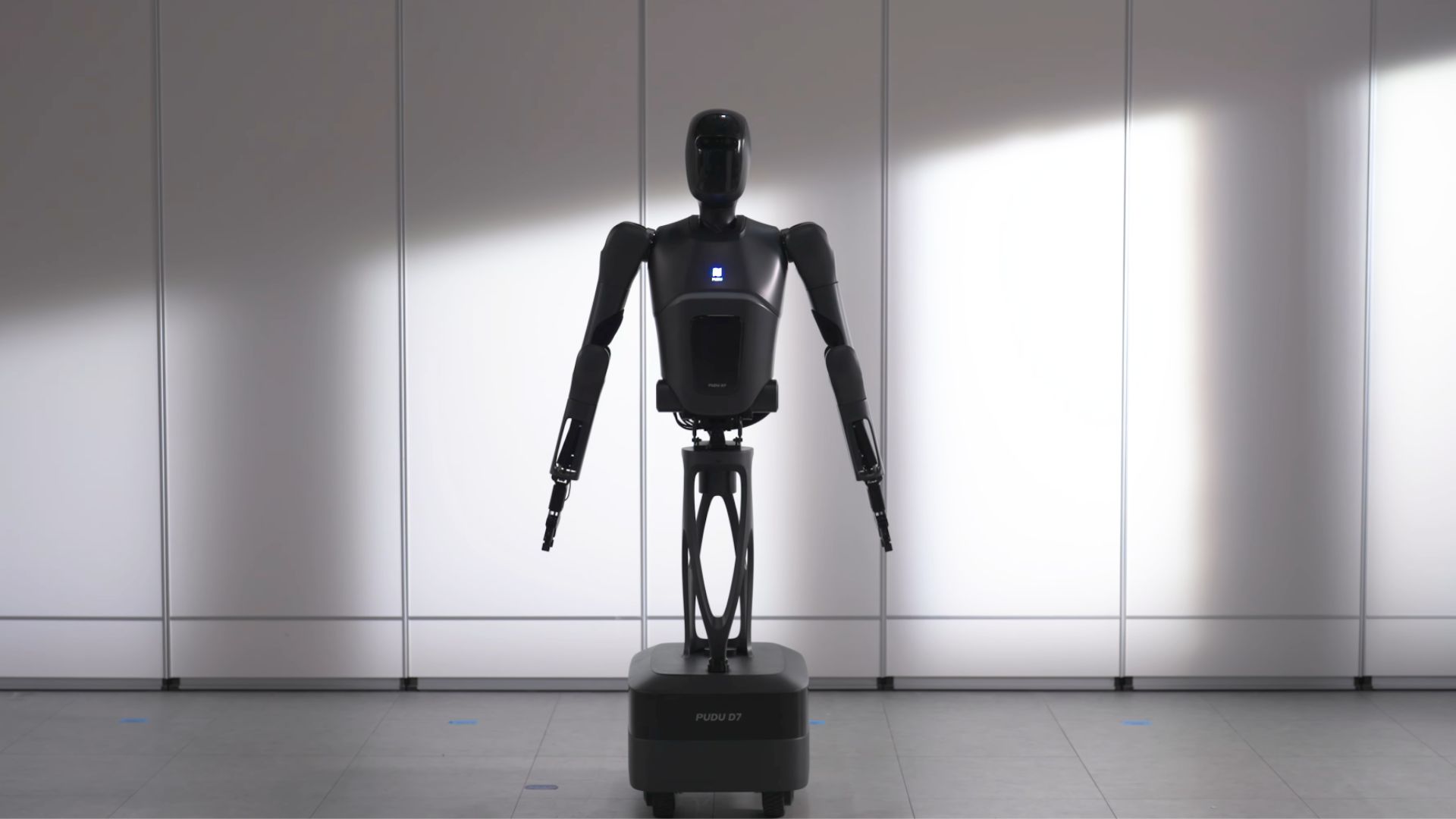
The PUDU D7 represents the first public application of this philosophy, capable of handling 14-kilogram payloads and reaching heights of two meters. According to internal data and recent market reports from Frost & Sullivan, Pudu currently leads the commercial service sector in global revenue and shipment volume. By leveraging its fleet of over 130,000 deployed units, the firm is collecting real-world data to refine its navigation and manipulation models. This shift from pre-programmed rules to autonomous task planning is intended to address operational inefficiencies in manufacturing, warehousing, and retail environments.




Comments (0)
No comments yet. Be the first!